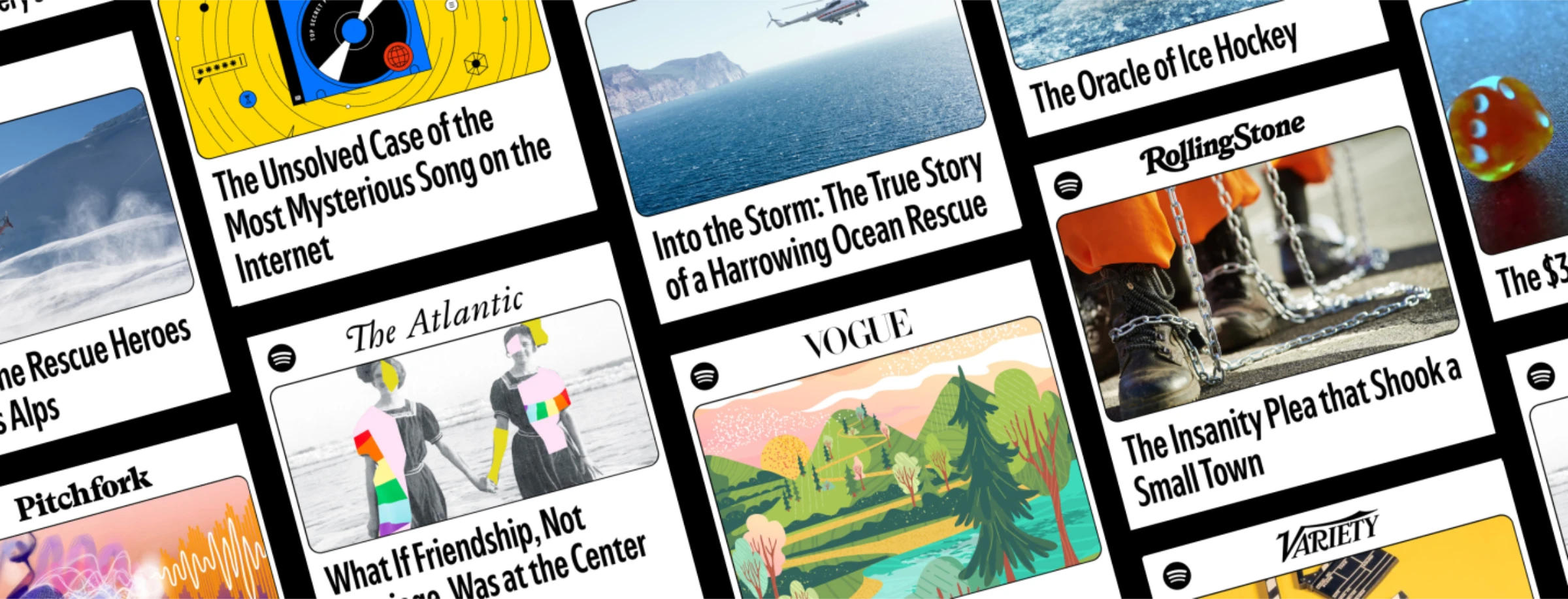
Spotify is executing yet another major expansion of its spoken-word catalog, moving aggressively beyond music, podcasts, and traditional audiobooks. The streaming giant has officially launched a global trial for a brand-new format called "Articles," integrated directly into its existing audiobooks infrastructure. The initiative essentially transforms long-form journalism into on-demand listening material, turning written editorial pieces into curated audio tracks.
At launch, the platform has rolled out an initial catalog of more than 650 English-language pieces. To populate the collection, Spotify has formed partnerships with major media publishers, sourcing celebrated long-form features from prominent cultural, music, and lifestyle titles including Rolling Stone, WIRED, Vogue, Billboard, The Atlantic, Pitchfork, GQ, Variety, Vibe, and Vanity Fair.
The Content Architecture and Economics
The production and distribution of the "Articles" catalog are handled internally by the Spotify Audiobooks team. Rather than deploying standard, low-cost text-to-speech algorithms, the platform is utilizing a sophisticated hybrid approach:
- The Narration Mix: The tracks feature a curated blend of professional human voice narration and advanced digital voice synthesis. To maintain platform transparency and adhere to its 2026 AI metadata guidelines, any segment utilizing digital or AI-generated voices is explicitly labeled within the app UI.
- The Length Constraint: To keep the content digestible for commuters, gym-goers, and multi-taskers, every single narrated article in the database tops out at a runtime of under two hours.
The billing structure for the new format is tied directly into a user's subscription tier. For Spotify Premium subscribers residing in the 22 markets where audiobooks are currently supported, Articles require no additional financial investment. Instead, the listening time is deducted directly from the standard 15-hour monthly audiobook allowance. Listening to a 45-minute Rolling Stone profile uses up 45 minutes of that monthly quota in the exact same manner as a conventional audiobook chapter.
Conversely, for free, ad-supported users, Spotify is testing an individual microtransaction model. Free tier listeners can purchase standalone access to any narrated article in the catalog for a flat rate of $1.99 per article.
Gateway Listening: The Strategic Micro-Book Model
The underlying business strategy behind Articles addresses a distinct user behavior pattern identified by the platform’s data teams. Since launching its full audiobook catalog over two years ago, Spotify has seen massive growth in the sector, with total audiobook listening hours surging 60% year-over-year. However, internal metrics indicate that a massive portion of the casual user base remains hesitant to engage with books due to the substantial time commitment required for full-length literature.
Colleen Prendergast, the Licensing Lead for Spotify Audiobooks, highlighted this precise friction point in the corporate rollout announcement:
"With Articles, we're introducing long-form journalism in audio as a natural extension of the music, podcasts, and audiobooks people already come to Spotify for, focused on topics we know they love. By bringing shorter-form content into the mix, we're meeting audiences where they are to help build healthy listening habits, ultimately growing engagement with books over time."
.webp)
.webp)