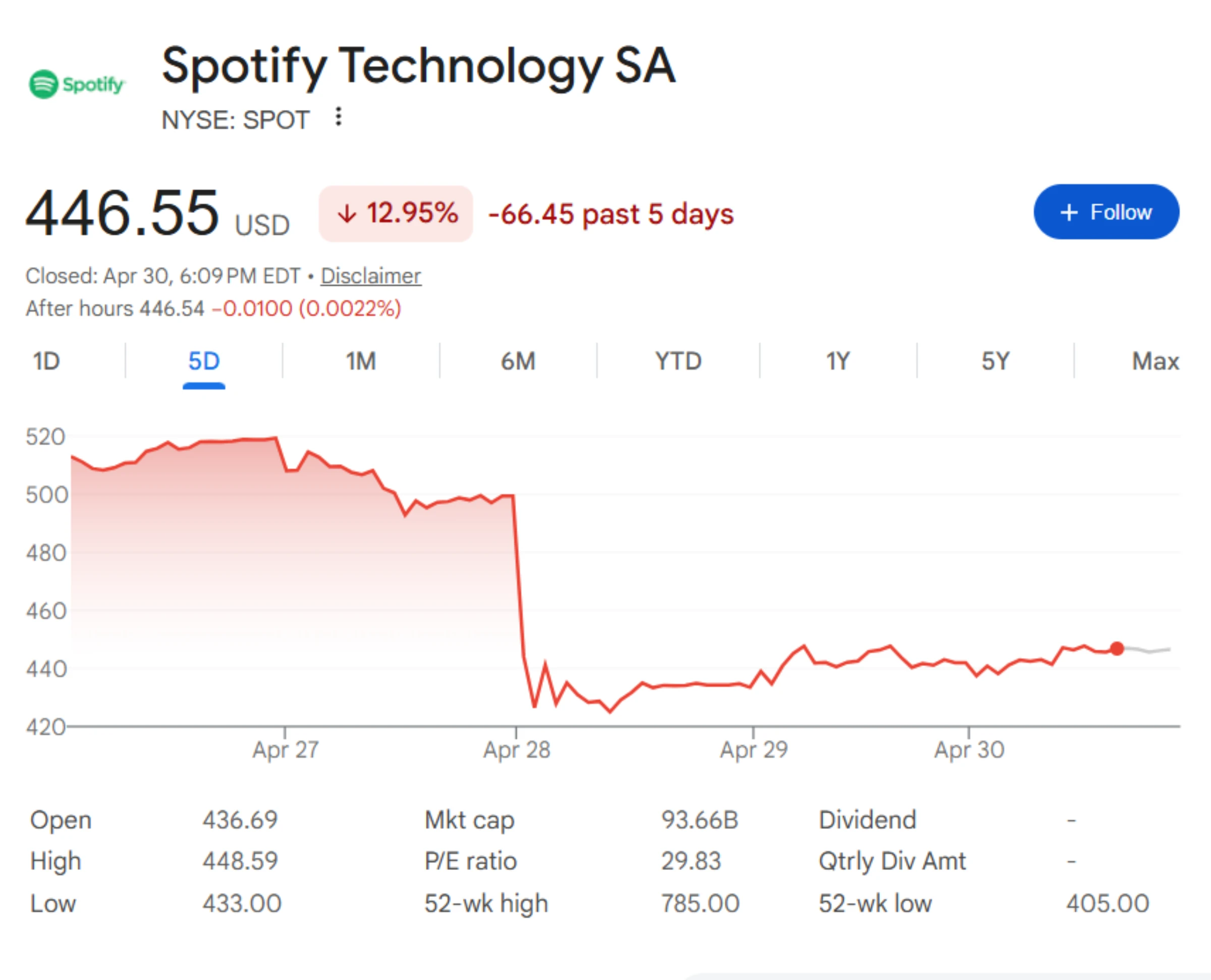
The landscape of the music business underwent a seismic shift this week as the two largest forces in the industry—Spotify and Universal Music Group (UMG)—released Q1 2026 earnings that told two very different stories. On Tuesday, April 28, Spotify saw its stock plummet nearly 13% in a single day, triggered by cautious guidance that spooked investors. Less than 24 hours later, UMG struck back with a "power move," announcing it would monetize half of its equity stake in the streaming giant to fund a massive €1 billion share buyback.
This coordinated chaos marks the end of the "growth-at-all-costs" era, signaling a new chapter where labels are prioritizing their own valuations over their platform partners.
The Spotify Selloff: Efficiency vs. Expectation
At first glance, Spotify’s numbers were actually impressive. The company posted a record Q1 operating profit of €750 million—beating its own guidance—and saw Monthly Active Users (MAUs) climb to 761 million. However, the market focused on the "cracks in the armor":
- Ad Revenue Slump: For the second consecutive quarter, ad-supported revenue declined, a worrying sign that the free tier is struggling to monetize as effectively as the premium tier.
- Cautious Guidance: Management warned of a slowdown in premium subscriber growth for the coming quarters, suggesting that the platform may be hitting a "saturation point" in major Western markets.
- The AI Premium: Investors are increasingly skeptical of Spotify's accelerating investments in AI personalization, questioning whether these high-compute costs will eat into the long-term margins the company has worked so hard to build.
UMG’s "Exit Strategy" and the Buyback
While Spotify was reeling, Sir Lucian Grainge and UMG were executing a strategic pivot. By authorizing the sale of 50% of their Spotify holdings (valued at roughly $1.4 billion), UMG isn't just cashing out—they are betting that their own stock is more undervalued than Spotify's.
The proceeds will fuel an expanded €1 billion share buyback program, doubling the commitment made just a month ago. This move is a direct response to a massive $64 billion takeover bid from Bill Ackman’s Pershing Square, which suggested UMG’s shares are trading at a "significant discount" relative to their actual influence in the ecosystem.
The Verdict: A Decoupling of Interests
The 48-hour window between Spotify’s earnings and UMG’s stake sale reveals a "decoupling" of the music industry's two most important players. For years, the labels and Spotify were tethered together by mutual growth. In 2026, UMG has signaled that it no longer needs to hold Spotify's hand—it would rather use that capital to protect its own house and its own artists.
.webp)